Engineered for Electric Vehicles, Solar Storage, and Industrial Applications.
The global prismatic battery cell market is currently experiencing an unprecedented surge, driven by the aggressive shift toward electrification in the automotive and energy sectors. Unlike cylindrical cells, prismatic battery cells are favored for their space efficiency, high capacity, and superior thermal management capabilities. Major industrial players across Europe, North America, and Asia are increasingly pivoting toward prismatic architectures to power the next generation of Electric Vehicles (EVs) and Battery Energy Storage Systems (BESS).
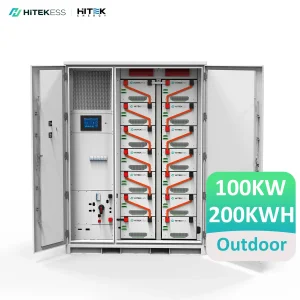
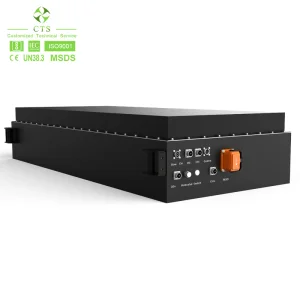
In the industrial landscape, prismatic cells have become the "gold standard" for heavy-duty applications. From 300kWh electric car battery packs to massive 200kWh+ grid-scale storage units, the rectangular form factor allows for dense packing and simplified Busbar connections, reducing the overall complexity of Battery Management Systems (BMS).
Market trends show a massive migration from NCM to LFP prismatic cells due to their inherent safety, longer cycle life (often exceeding 4000-6000 cycles), and lower cost. LFP technology is now the primary choice for solar home systems and commercial energy storage.
Leading factories like CATL and BYD are optimizing prismatic designs to bypass module levels, integrating cells directly into the pack. This increases energy density and reduces weight, making EVs more efficient.
The "Green Battery" initiative is forcing suppliers to adopt carbon-neutral production processes. Recyclability of aluminum-cased prismatic cells is significantly higher than pouch or cylindrical alternatives.
Innovations in liquid cooling and integrated heat sinks for prismatic racks are allowing for faster charging rates (up to 5C discharge) without compromising safety.
Where Prismatic Technology Meets Real-World Needs
Prismatic battery cells are not just industrial components; they are the heart of localized energy independence. Our clients utilize our Grade A LiFePO4 cells in diverse environments:
As a premier Prismatic Battery Cell Factory based in China, we offer advantages that domestic suppliers elsewhere simply cannot match. China currently controls over 70% of the global lithium-ion battery supply chain, providing us with unique leverage in quality and cost.
At Zhejiang Emy Car Co., Ltd., we are dedicated to bringing you expert insights into the world of electric vehicles and high-performance energy storage. Our team of seasoned automotive professionals works tirelessly to evaluate and rank the best power solutions on the market. With over 75 years of automotive testing experience, we bring you the most accurate, up-to-date, and reliable industry insights.
Our rankings aren’t just based on opinions—they reflect objective test results combined with in-depth hands-on evaluations. From acceleration, range, and handling to thermal management and cycle life, we provide thorough insights that truly help you find the prismatic cells that best fit your needs.
Explore our full range of lithium solutions and accessories.
When selecting a Prismatic Battery Cell Supplier, it is crucial to understand why this form factor is dominating the industrial market. Prismatic cells consist of large sheets of anodes, cathodes, and separators sandwiched or folded together and pressed into a hard metallic casing. This design offers several key advantages over cylindrical counterparts:
Reliability is the cornerstone of the battery business. Professional procurement officers from EV companies or solar installation firms prioritize the following when vetting best prismatic battery cell factories:
1. Consistency in Internal Resistance (IR): A pack is only as strong as its weakest cell. Our factory ensures that every shipment contains cells with tightly matched IR to prevent premature pack degradation.
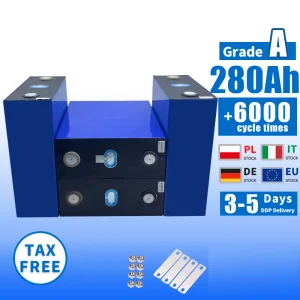
2. Cycle Life Verification: While many claim 6000 cycles, we provide verified test data showing capacity retention above 80% after years of heavy cycling. This is why our 3.2V 280Ah LiFePO4 cells are the top choice for long-term energy storage projects.
3. Safety Certifications: Shipping lithium batteries internationally requires compliance with UN38.3, MSDS, and UL standards. We handle all certification paperwork to ensure seamless global logistics.
As we look toward 2030, the prismatic format is expected to evolve. We are already investing in research for "Semi-Solid State" prismatic cells that offer even higher safety thresholds and energy densities approaching 350-400 Wh/kg. For industries ranging from medical wearable health monitors to large-scale grid storage, the future of power is rectangular, efficient, and increasingly sustainable.
 Emy Car