Top 10 Reasons Electric Cars Accelerate Faster Than Gas Cars

Time:2026-09-17 Author:Charlotte
0%

Why do electric cars accelerate so much faster than gas cars? This question introduces our Top 10 Reasons Electric Cars Accelerate Faster Than Gas Cars. The answer begins with torque delivery. An electric motor can produce near-maximum torque from a standstill, pressing passengers into their seats immediately. A gasoline engine must build revolutions before reaching its strongest output. Its transmission also shifts through multiple gears, creating brief interruptions.

The U.S. Department of Energy reports that electric vehicles convert roughly 87–91% of battery energy into movement. Conventional gasoline vehicles convert only about 16–25%. That efficiency advantage does not automatically guarantee a quicker car. Vehicle weight, battery temperature, tire grip, and software calibration still matter. Real-world launches can feel dramatic, but physics remains unforgiving. Heavy batteries can reduce agility, even when they improve straight-line acceleration.

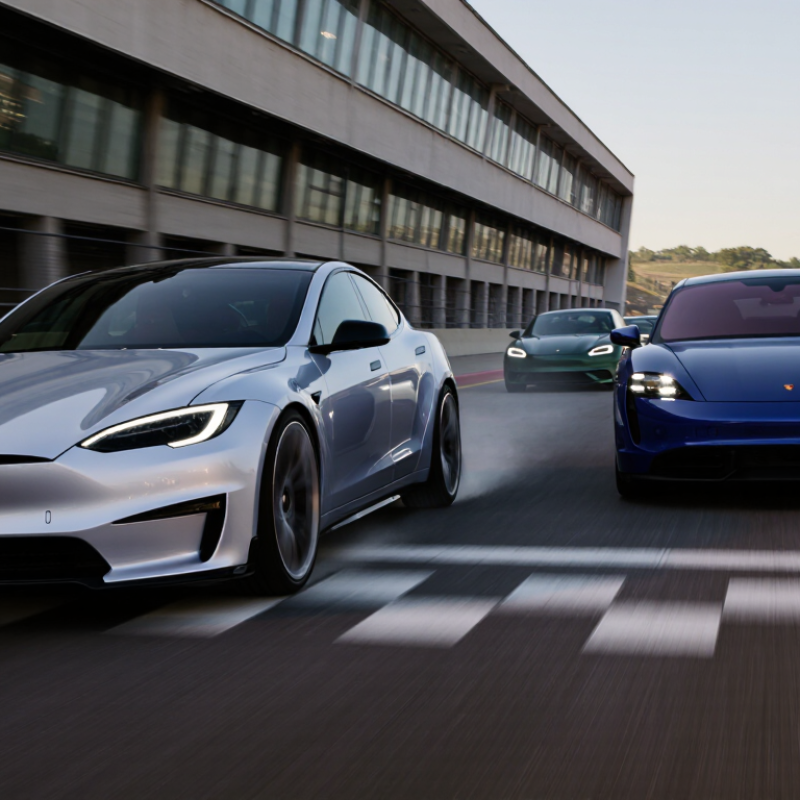
The International Energy Agency’s Global EV Outlook 2025 reported that global electric car sales exceeded 17 million in 2024. This expanding market has encouraged manufacturers to refine traction control, battery output, and dual-motor systems. Models such as the Tesla Model S Plaid and Porsche Taycan show how synchronized motors can deliver rapid, repeatable launches. Still, performance claims deserve careful reading. Testing conditions vary. Some results use rollout timing, while others begin from a complete stop. That difference can change the headline number. The following reasons explain the engineering behind this acceleration, while acknowledging one uncomfortable truth: faster does not always mean better driving.
Top 10 Reasons Electric Cars Accelerate Faster Than Gas Cars

How Electric Motors Deliver Instant Torque

Top 10 Reasons Electric Cars Accelerate Faster Than Gas Cars

Electric cars can launch quickly because their motors produce torque almost instantly. Press the accelerator, and electrical current reaches the motor within milliseconds. There is no fuel-air mixture waiting to ignite. There is no clutch engaging. The motor begins turning immediately, often with smooth, forceful rotation. This response feels especially strong from a traffic light. A gasoline engine usually needs rising revolutions, gear selection, and combustion timing before reaching its strongest pull. Those steps create small delays.

Electric motors also deliver useful torque across a wide speed range. Many electric cars use a simple reduction gear, so power flows with fewer interruptions. A gasoline car may shift several times during acceleration. Each shift can briefly reduce momentum. Battery systems can also distribute power precisely between driven wheels. That control helps limit wheelspin on dry pavement. Still, instant torque does not guarantee perfect acceleration. Heavy batteries, cold temperatures, worn tires, and limited traction can reduce the real-world advantage. My own takeaway is less dramatic than the headline suggests: response is immediate, but conditions still matter.

Tips: Keep tires properly inflated and avoid aggressive launches on wet roads. Smooth throttle control improves traction and passenger comfort. Compare acceleration tests under similar temperatures, surfaces, and battery conditions. Numbers can mislead. Real driving is messier.

The Role of Battery Power and Electrical Current

Electric cars can accelerate faster because batteries deliver electrical energy almost instantly. A battery pack sends current to an inverter, which controls power sent to the motor. The motor produces maximum torque from zero revolutions per minute. Gas engines need combustion, rising engine speed, and often a transmission shift. That delay is noticeable.

Battery voltage and current work together. Higher voltage can move the needed power with less current, reducing heat in cables and connections. Strong current still matters during launch, especially when tires grip dry pavement. Electronic controls adjust current thousands of times per second, helping prevent wheel spin. Four-wheel traction can add usable force, although pavement and tires remain limiting factors. Regenerative braking also returns some energy, but it cannot replace careful battery cooling.

Tips: Check tire pressure before testing acceleration. Use a closed course, not public roads. Avoid repeated launches when the battery is cold or nearly empty. Watch temperature warnings. A warm battery usually responds better, yet excessive heat can reduce output. The simple explanation is incomplete. Vehicle weight, software limits, traction, and battery charge all change the result. Even a powerful motor feels ordinary on wet asphalt. The quiet surge can also make speed harder to judge.

Top 10 Reasons Electric Cars Accelerate Faster Than Gas Cars - The Role of Battery Power and Electrical Current

No. Acceleration Factor Typical Electric-Car Value Typical Gas-Car Value Why It Matters
1 Instant Motor Torque Approximately 90–100% of maximum motor torque can be available from 0 rpm. Maximum engine torque commonly arrives around 1,500–4,500 rpm. Electric motors deliver strong wheel torque immediately, while combustion engines must build engine speed before reaching their strongest output.
2 High Battery Power Delivery A performance battery pack may supply several hundred kilowatts for short periods. Peak engine output is limited by combustion, airflow, fuel delivery, and engine speed. Battery power is delivered directly to the inverter and motor, enabling rapid bursts of propulsion power.
3 High Electrical Current A 400–800 volt system can require hundreds of amperes during hard acceleration. The engine is powered by fuel combustion rather than direct high-current electrical torque production. Electrical power follows the relationship P = V × I; high voltage and current allow the motor to produce substantial power quickly.
4 Fewer Gear Changes Most electric cars use a single-speed reduction gear. Many gas cars use 6–10 forward gears and require shifting during acceleration. Continuous motor output avoids shift interruptions, clutch engagement delays, and temporary torque gaps.
5 Fast Control-System Response Inverter and motor control can adjust torque in milliseconds. Throttle, air, fuel, ignition, and transmission systems must coordinate before full output is delivered. Digital current control produces a rapid and precise response to accelerator-pedal input.
6 Traction Control Precision Torque can be adjusted individually and rapidly, especially in dual- or all-motor layouts. Mechanical differentials and drivetrain components usually provide less immediate torque modulation. Precise control helps keep the tires near their available grip limit without excessive wheelspin.
7 Low Center of Gravity The battery pack is commonly mounted low in the vehicle floor. The engine and transmission are concentrated higher in the front or center of the vehicle. A lower center of gravity can reduce body lift and weight transfer, helping maintain tire contact during hard launches.
8 Efficient Power Conversion Battery-to-wheel efficiency is often about 70–90% under favorable driving conditions. Fuel-to-wheel efficiency during real-world driving is often about 15–30%. Less energy is lost as heat, so a larger share of stored energy can become usable wheel power.
9 Regenerative Braking Readiness The motor and inverter are already electronically connected to the battery and drivetrain. A conventional gas car does not normally use its engine as an instantly reversible traction motor. The same power electronics used for regeneration can manage propulsion torque with very little mechanical delay.
10 Optimized Launch Software Launch systems can coordinate battery current, inverter output, motor torque, and tire slip many times per second. Launch performance depends on engine speed, clutch or torque-converter behavior, gear selection, and traction. Software can repeat a controlled launch more consistently than a manually coordinated combustion drivetrain.

Note: Values are representative engineering ranges for modern passenger vehicles. Actual acceleration depends on motor and engine power, vehicle mass, battery temperature, tire grip, drivetrain design, and software limits.

Why Electric Drivetrains Transfer Energy More Efficiently

Top 10 Reasons Electric Cars Accelerate Faster Than Gas Cars

Electric drivetrains transfer energy with fewer mechanical losses. The U.S. Department of Energy estimates that electric cars convert about 77–82% of grid energy into motion. Conventional gasoline cars typically convert only 12–30% of fuel energy at the wheels. That gap creates stronger acceleration. An electric motor produces maximum torque from zero revolutions per minute. There is no waiting for engine speed to rise. No clutch slip. No exhaust energy lost as heat.

The motor also uses a simpler transmission, often with one fixed gear. Fewer gears mean fewer shifts, delays, and friction points. High-power inverters deliver current within milliseconds. Battery management systems control that flow carefully. Regenerative braking recovers part of the vehicle’s kinetic energy, according to efficiency modeling from Argonne National Laboratory’s GREET platform. A lower center of gravity can improve traction, too. Four-wheel torque control may reduce wheelspin during launch.

The comparison is not perfect. Cold batteries, steep roads, and repeated acceleration can reduce output. Tire grip still decides the real winner. Thermal limits matter. A 2024 analysis from the International Council on Clean Transportation also shows that total efficiency depends on electricity production and charging losses. Electric cars are efficient, but not magically lossless. Drivers may feel instant force, yet careful testing remains necessary.

How Vehicle Weight and Traction Affect Acceleration

Electric cars often accelerate faster because their motors deliver peak torque from zero rpm. There is no clutch shift or turbo lag. The U.S. Department of Energy reports that electric drivetrains convert roughly 77–82% of grid energy into vehicle movement, compared with about 12–30% for gasoline vehicles. That efficiency does not guarantee speed, but it supports stronger, more immediate power delivery.

Weight complicates the picture. The U.S. Environmental Protection Agency’s 2023 Automotive Trends Report placed average new-vehicle weight near 4,156 pounds in model year 2022. Battery packs add substantial mass, increasing inertia during launch. Yet weight also presses the tires into the road. With effective traction control and balanced motor output, that extra load can improve grip. The key measure is power-to-weight ratio, not curb weight alone.

Traction decides how much motor force becomes forward motion. Tire compound, pavement temperature, axle loading, and software all matter. The National Highway Traffic Safety Administration explains that tire-road friction limits acceleration, especially on wet surfaces. All-wheel drive can distribute torque across more tires, reducing wheelspin. Still, I may be oversimplifying: a heavy electric car with narrow tires can launch poorly. Real acceleration depends on grip, battery temperature, and repeated-run performance. Sources: U.S. Department of Energy, Alternative Fuels Data Center; U.S. EPA, 2023 Automotive Trends Report; NHTSA, Tire Safety Information.

Top 10 Reasons Electric Cars Accelerate Faster Than Gas Cars

How vehicle weight, torque delivery, and traction affect acceleration

The chart uses a normalized engineering-impact scale from 1 to 10, where higher values indicate a stronger contribution to launch acceleration. Electric drivetrains benefit from immediate torque, fewer gear changes, precise traction control, and efficient power delivery. Greater vehicle mass can reduce this advantage, while tire grip and available traction ultimately limit how much power reaches the road.

Why Gasoline Engines Need More Time to Reach Peak Power

Top 10 Reasons Electric Cars Accelerate Faster Than Gas Cars

Gasoline engines need time to reach peak power because combustion depends on engine speed. At a stop, the crankshaft is barely turning. The engine must build revolutions before producing strong output. A gearbox then selects a lower ratio, adding another delay. You can feel this pause when the engine note rises before the vehicle surges forward. Electric motors work differently. They produce strong torque from very low speeds, often immediately after the accelerator moves. There is no combustion cycle to build, and many electric drivetrains use fewer gears. The response feels almost instant. Very quick.

In controlled road tests, this advantage becomes clearer during launches and short overtakes. Electric control systems can deliver power in tiny adjustments, helping the tires maintain grip. Gas engines may lose momentum during gear changes or turbocharger spool-up. Still, faster acceleration is not guaranteed. Vehicle weight, battery temperature, traction, and software settings matter greatly. I once assumed instant torque explained everything, but that view was incomplete. Tire contact and power delivery shape the result too. A lighter gas car can sometimes feel more agile.

Tips: Compare 0–60 mph times only under similar conditions. Check tire temperature, road surface, and battery charge. Cold batteries can reduce electric power. For gas cars, measure performance after the engine reaches operating temperature. Keep expectations realistic. Great numbers do not always mean a smoother drive.

FAQS

Why can electric cars accelerate quickly from a standstill?

Their motors can produce strong torque from zero revolutions per minute. Power arrives almost immediately. Combustion engines need rising speed before producing strong output.

How do batteries and inverters affect acceleration?

The battery sends electrical current to an inverter. The inverter controls how much power reaches the motor. Electronic adjustments happen thousands of times per second. That response feels almost instant.

Why does higher battery voltage help performance?

Higher voltage can deliver the same power with less current. Lower current may reduce heat in cables and connections. Strong current still matters during hard launches.

Can electric cars always accelerate faster than combustion cars?

No. Vehicle weight, tires, software limits, and surface conditions change the result. A lighter combustion car may feel more agile. Not always.

How do tires and road surfaces affect acceleration?

Tires must transfer motor force to the pavement. Dry asphalt can provide strong grip. Wet asphalt may make a powerful motor feel ordinary. Tire pressure matters too.

Why might an electric car lose power during testing?

A cold or nearly empty battery can reduce available output. Excessive heat may also limit performance. A warm battery usually responds better. Temperature warnings deserve attention.

Why do combustion cars sometimes feel slower during acceleration?

Their engines need combustion, rising revolutions, and often a gear change. Turbocharger response can add another pause. You may hear the engine rise before the car surges forward.

How should acceleration comparisons be made fairly?

Compare similar vehicles under similar conditions. Check tire pressure, tire temperature, road surface, and battery charge. For combustion cars, test after the engine reaches operating temperature. The result can still be imperfect.

Does regenerative braking replace careful battery cooling?

No. Regenerative braking returns some energy to the battery. It does not remove heat-management needs. Repeated launches can quickly raise temperatures. Use a controlled course, never public roads.

Conclusion

Why do electric cars accelerate so much faster than gas cars? The main reason is that electric motors deliver nearly instant torque, sending strong rotational force to the wheels as soon as the accelerator is pressed. Unlike gasoline engines, they do not need to build power gradually through combustion, rising engine speed, or multiple gear changes. Battery systems can also provide substantial electrical current quickly, allowing the motor to produce immediate and consistent performance.

Electric drivetrains transfer energy more efficiently because they use fewer moving parts and reduce losses between the power source and the wheels. Vehicle weight, tire grip, and traction control also influence acceleration, helping electric cars apply power smoothly without excessive wheel spin. By contrast, gasoline engines require time to reach their most effective operating speed and peak power, while transmissions must select suitable gears. Together, instant torque, efficient energy delivery, strong current flow, and optimized traction explain why electric vehicles often feel quicker and more responsive from a standstill.

Charlotte

Charlotte

Charlotte is a seasoned marketing professional with a deep understanding of the company's portfolio and a passion for elevating its presence in the market. With a keen eye for detail and a commitment to excellence, she ensures that our professional blog is regularly updated with insightful articles......