Electric vehicles offer quiet acceleration, but their tires often reveal the hidden cost of that smooth performance. Many owners ask, “Why is my electric car tire wearing out so fast?” The answer usually involves several forces working together. Battery packs make electric cars substantially heavier than similar gasoline models. Instant torque can also spin the front or rear tires before the driver notices. Every sharp launch scrubs rubber from the tread. It happens quickly.
Matt Edmonds, executive vice president of Tire Rack, has explained, “Electric vehicles are heavier and have more torque, which can increase tire wear.” His observation reflects everyday workshop experience. A tire may look acceptable at the center, yet show rounded shoulders or small rubber flakes near the outer tread. Those details matter. They often point toward aggressive cornering, low pressure, poor alignment, or repeated hard acceleration.
This guide examines the real reasons behind premature EV tire wear. It considers tire pressure, wheel alignment, driving habits, regenerative braking, suspension condition, and tire selection. The correct pressure is not a guess from the sidewall. Check the driver-door label when the tires are cold. Rotate them according to the manufacturer’s schedule, if the tire design allows rotation. Some EVs use staggered sizes, so rotation may be limited.
There is no single answer for every vehicle. I have to admit that driver behavior is easy to underestimate. A calm commute can still hide rapid wear during wet-weather launches or tight parking turns. Regular inspections remain essential. If tread wear looks uneven, measure it, photograph it, and ask a qualified tire professional to inspect the vehicle.
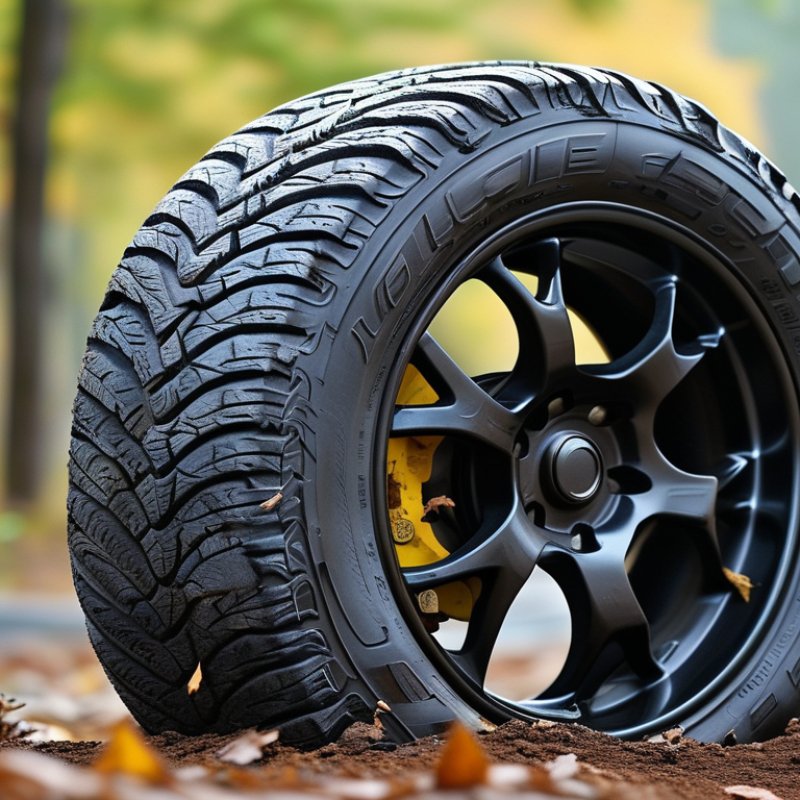
Electric vehicles can wear tires faster because several forces act together. The U.S. Department of Energy notes that battery packs can make comparable vehicles 10–20% heavier. That extra load presses harder against the road. Instant motor torque adds another problem. A gentle pedal movement can create strong wheel force, especially during launches. I have seen tread disappear quickly after repeated hard starts. The driver may not notice the damage until wet braking feels less confident.
Driving conditions also matter. The International Energy Agency’s Global EV Outlook 2024 recorded nearly 14 million electric car sales in 2023. However, that report does not measure tire wear. This distinction matters. Tire life varies with vehicle weight, wheel alignment, tire pressure, temperature, and driving style.
NHTSA recommends checking tire pressure at least monthly, when tires are cold. Even a small pressure loss can increase shoulder wear and rolling resistance. Uneven wear often points toward alignment problems.
Check the pressure before long trips. Inspect the inner and outer tread edges.
Rotate tires according to the vehicle’s service schedule, not personal guesswork.
The U.S. Tire Manufacturers Association identifies underinflation, misalignment, and aggressive driving as major wear causes. Smooth acceleration helps. So does avoiding unnecessary cargo.
I still think many drivers blame electric power too quickly. Sometimes, the real culprit is a neglected pressure gauge or a damaged suspension component.
How to Stop Your Electric Car Tires Wearing Out So Fast?
Electric vehicles can wear tires quickly because they carry heavy battery packs and deliver instant torque. Correct pressure is the simplest defense. Check all four tires when cold, ideally before driving. Use the pressure on the driver-door placard, not the number molded into the sidewall. The sidewall figure usually shows the maximum permitted pressure.
The U.S. Department of Energy reports that tires underinflated by 1 psi can reduce fuel economy by about 0.2%. Low pressure also increases sidewall flex, heat, and shoulder wear. On an electric car, this wasted energy can reduce driving range. NHTSA advises checking tire pressure monthly and before long trips. A warning light is not enough. It may activate only after pressure has already fallen significantly.
Tips
Keep a reliable gauge in the glove box. Record pressures after checking them. Inspect the tread edges for uneven wear. Rotate tires according to the vehicle manual, and request alignment checks after pothole impacts. Keep passengers, tools, and luggage within the stated payload limit. The load includes people and roof cargo. Extra weight increases tire stress and braking demand. I sometimes underestimate small items in the trunk. That habit deserves correction. Smooth acceleration also helps. Sudden torque can scrub rubber from the tread, especially on wet pavement. DOE data connects proper inflation with improved efficiency, while tire-safety guidance consistently links correct pressure and load control with longer service life.
| Maintenance Dimension | Recommended Practice | Useful Measurement or Limit | Why It Matters for Electric Vehicles |
|---|---|---|---|
| Cold tire pressure | Inflate each tire to the pressure shown on the vehicle placard or in the owner’s manual. Do not use the maximum pressure molded on the tire sidewall as the normal setting. | Check when the vehicle has been parked for at least 3 hours or driven less than 1 mile. Typical passenger-car settings are approximately 32–36 psi (220–250 kPa), but the placard value takes priority. | Correct pressure helps maintain the intended contact patch, rolling resistance, handling, and tread wear. |
| Pressure loss response | Inspect the valve, valve core, wheel rim, and tire for leaks if pressure repeatedly falls. Repair or replace damaged components before continued driving. | A pressure change of about 1 psi (7 kPa) per month can occur naturally; a faster or repeated loss requires inspection. Temperature changes can also alter readings. | Underinflation increases flexing, heat buildup, rolling resistance, and shoulder wear. |
| Overinflation control | Release excess air only when the tires are cool, then reset all four tires to the placard specification. | Avoid routinely exceeding the recommended cold pressure. Measure with the same accurate gauge whenever possible. | Excess pressure can reduce the effective contact area and encourage faster center-tread wear and a harsher ride. |
| Vehicle load | Keep passengers and cargo within the vehicle’s specified seating, cargo, axle, and gross vehicle weight limits. Distribute heavy items low and evenly. | Use the loading information on the vehicle placard or certification label. Never exceed the tire load index, axle rating, or gross vehicle weight rating. | Electric vehicles are often heavier because of their battery systems, so additional cargo increases tire and suspension loads. |
| Load-related pressure adjustment | Use the placard’s specified pressure for the normal and maximum-load conditions. If no separate value is listed, do not create an adjustment based on guesswork. | Never reduce pressure to improve ride comfort when the vehicle is heavily loaded. | A heavy load combined with low pressure increases sidewall deflection, heat, and irregular wear. |
| Tire rotation | Rotate tires only when permitted by the tire and vehicle instructions. Keep directional or staggered tire arrangements in their required positions. | A common inspection or rotation interval is about 5,000–8,000 miles (8,000–13,000 km), unless the vehicle manual specifies otherwise. | Electric-car torque can accelerate wear on driven tires, especially during frequent hard starts. |
| Tread-depth monitoring | Measure tread depth at several points across each tire and compare inner, center, and outer sections. | Replace tires when tread reaches the legal limit in the relevant jurisdiction; 2/32 inch (1.6 mm) is a widely used minimum threshold. Consider earlier replacement in wet climates. | Uneven tread loss can indicate incorrect pressure, misalignment, worn suspension parts, or excessive load. |
| Wear-pattern diagnosis | Inspect the tread before adjusting pressure or replacing tires. Correct the underlying cause rather than simply changing tire position. | Both shoulders worn: possible underinflation or overload. Center worn: possible overinflation. One-sided wear: possible alignment or suspension issue. | Early pattern recognition can prevent continued uneven wear and improve tire service life. |
| Driving behavior | Accelerate smoothly, avoid unnecessary hard cornering, and reduce speed over potholes and sharp road edges. | Check tires after impacts, sudden vibration, pulling, or a change in steering feel. | Instant electric-motor torque can place high stress on the tread and driven axle during aggressive launches. |
| Inspection schedule | Check pressure at least monthly and before long trips. Visually inspect for cuts, bulges, embedded objects, and abnormal wear. | Inspect immediately if the tire-pressure warning light appears or if a tire loses pressure repeatedly. | Regular checks identify pressure and load problems before they develop into premature tire failure. |
Note: Always follow the vehicle placard, owner’s manual, tire load index, and applicable local regulations. Tire pressures should be measured cold.
How to Stop Your Electric Car Tires Wearing Out So Fast?
Use Smooth Acceleration and Braking to Reduce Tread Wear
Electric vehicles deliver strong torque the moment you press the accelerator. That instant force can scrub rubber from the tread, especially on damp roads or steep streets. Use a gentle pedal movement instead of launching from every stop. In my experience, easing away from traffic lights makes the car feel calmer and reduces visible shoulder wear. It also helps passengers stay comfortable.
Smooth braking matters just as much. Lift off the accelerator early, then apply the brake progressively when needed. Regenerative braking can slow the car quickly, but abrupt inputs may increase tire stress. Leave more following distance, watch traffic several vehicles ahead, and avoid repeated stop-and-go jolts. Small changes matter.
Check tire pressure when the tires are cold, preferably every few weeks. Underinflation increases rolling resistance and can wear both outer shoulders. Overinflation may reduce grip and create uneven center wear. Follow the pressure listed in the vehicle information, not the maximum number molded into the sidewall. Have a qualified technician check alignment if the steering pulls or the tread shows feathered edges. Rotate tires according to the vehicle manual, though rotation intervals may differ by drivetrain and tire design. I once blamed acceleration for uneven wear, but a slight alignment problem was the real cause. Driving smoothly helps, but it cannot correct neglected maintenance.
Use smooth acceleration and braking to reduce sudden tire-force peaks. The chart shows relative kinetic energy at different speeds, calculated using the physical relationship that kinetic energy increases with the square of speed. Higher energy must be managed by the tires and brakes, so gradual pedal inputs can help reduce wheel slip and tread stress.
Electric car tires can wear quickly when alignment, suspension, or tire condition is ignored. Extra vehicle weight increases pressure on the tread, while strong acceleration can scrub rubber from the road. However, rapid wear is not always caused by driving style.
Check wheel alignment when the car pulls sideways, the steering wheel sits off-center, or one tread edge looks smoother. Incorrect toe settings often create a feathered pattern across the tread. Uneven camber can wear the inner or outer shoulder. A professional alignment check is more reliable than judging the steering wheel alone. The first check is not always the right diagnosis.
Inspect suspension parts during routine servicing. Worn bushings, loose joints, or weak dampers can let the wheel move unpredictably. Look for cupped tread, bouncing after a bump, or clunking sounds. Tire pressure deserves equal attention. Measure it with a cool tire and follow the vehicle’s recommended pressure, not the number molded into the sidewall. Check tread depth, cracks, punctures, and uneven wear every few weeks. Rotate tires only when the tread pattern and vehicle design allow it. A neglected detail can become an expensive problem.
Electric vehicles can wear tires quickly because they carry heavy battery packs and deliver instant torque. I once assumed any new tire would handle that load. That assumption was wrong. Choose tires designed for electric vehicles, with the correct load rating, strong sidewalls, and suitable rolling resistance. Check your vehicle handbook before buying. The quietest tire is not always the safest choice.
Rotation timing matters just as much. Follow the interval recommended by the vehicle manufacturer, often around 5,000 to 8,000 miles. Driving style may shorten that interval. Hard launches, frequent fast charging trips, and rough roads can create uneven wear. Ask a qualified technician to inspect alignment during rotation. A steering wheel that pulls slightly can damage one tire’s inner edge before the tread looks worn. I have missed this warning before.
Tips: Check tire pressure when the tires are cold. Do it monthly. Use the pressure listed on the vehicle placard, not the maximum number on the sidewall. Measure tread depth across several points, especially on the front axle. Rotate tires only in the pattern approved for your tire type. Some directional or staggered setups cannot follow a standard rotation pattern. Keep records of mileage and tread readings. Small notes can reveal a serious pattern.
: Battery packs add weight, while instant torque can scrub tread during acceleration. EV tires face greater stress. Correct pressure helps reduce heat, flexing, and uneven wear.
Use the pressure shown on the driver-door placard. Do not use the maximum number molded into the sidewall. Check all four tires when cold. Check them monthly.
No. The warning may appear after pressure has already dropped significantly. Keep a reliable gauge in the glove box. Record each reading after checking it.
Passengers, luggage, tools, and roof cargo all count toward vehicle load. Extra weight increases tire stress and braking demand. I sometimes underestimate small trunk items. That habit needs correction.
Check alignment if the car pulls sideways or the steering wheel sits off-center. Inspect it after hitting a pothole. Feathered tread may indicate incorrect toe settings. The first diagnosis is not always correct.
Worn bushings, loose joints, or weak dampers can move wheels unpredictably. Look for cupped tread, bouncing, or clunking sounds. A professional inspection is safer than guessing.
Choose tires with the correct load rating, strong sidewalls, and suitable rolling resistance. Check the vehicle handbook before buying. The quietest tire is not always the safest choice.
Follow the vehicle’s recommended interval, often about 5,000 to 8,000 miles. Some directional or staggered tires need special rotation patterns. Ask for an alignment check during rotation. Small notes help.
Sudden acceleration can remove rubber quickly, especially on wet pavement. Rough roads and frequent long trips may also accelerate wear. Use smoother inputs. I have missed warning signs before.
Electric vehicles can wear through tires faster because their batteries add substantial weight, while instant motor torque can put extra stress on the tread. If you are asking, “Why is my electric car tire wearing out so fast?” start by checking tire pressure and maintaining the manufacturer’s recommended level. Incorrect pressure, excessive cargo, and frequent heavy loads can all increase uneven wear and reduce tire life.
Smooth acceleration, gradual braking, and careful cornering help preserve the tread. Inspect the tires regularly for uneven patterns, cuts, low tread depth, or embedded objects, and have the wheel alignment and suspension checked if the vehicle pulls to one side or the steering wheel vibrates. Select tires designed to handle an electric vehicle’s weight and torque, then rotate them at suitable intervals based on the vehicle’s guidance and wear pattern. These habits can improve safety, driving efficiency, and overall tire longevity.

Emy Car