As electric vehicles (EVs) gain popularity, many users wonder, "Why does EV charging speed drop after 80 percent?" Understanding this phenomenon is crucial for EV owners aiming for efficiency. According to Dr. Emily Thompson, an expert in battery technology, "The last stretch of charging is always slower due to safety and battery longevity concerns."
When an EV battery reaches around 80 percent capacity, the charging speed significantly decreases. This slowdown occurs because of the way lithium-ion batteries work. As they charge, they generate heat. At higher states of charge, the chemical reactions within the battery need to be more regulated to avoid damage.
Furthermore, the charging infrastructure plays a role. Not all charging stations optimize for speed in the final battery percentage. For many drivers, understanding these limitations is important. It can influence their charging habits and route planning during long trips. Acknowledging these factors leads to better EV usage and satisfaction. Nonetheless, the journey toward faster charging solutions continues, inviting further investigation and innovation.
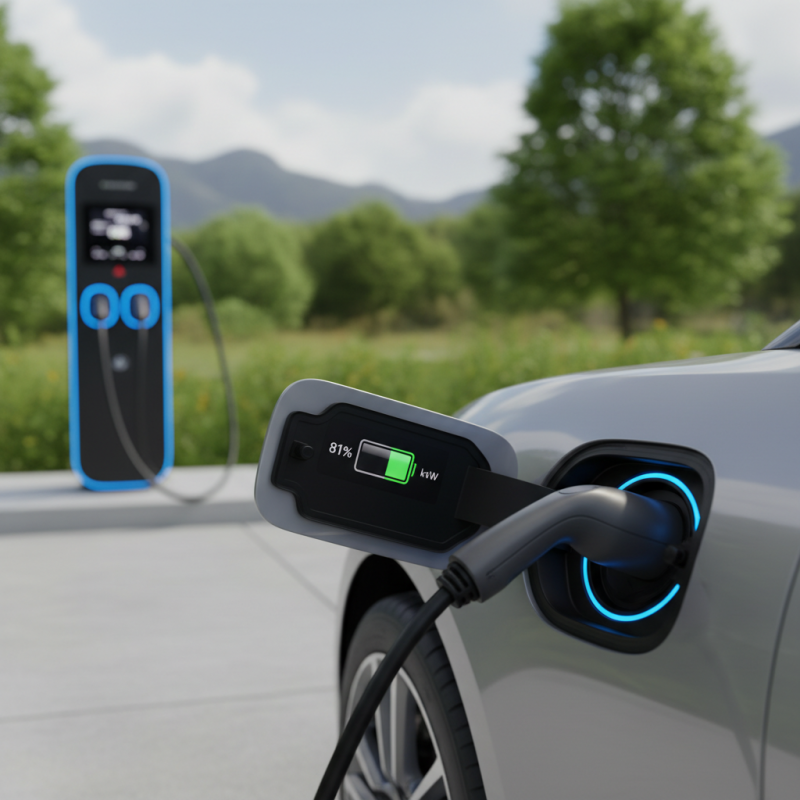
Charging an electric vehicle (EV) becomes slower after reaching about 80 percent battery capacity. This phenomenon relates closely to the battery's chemistry and safety. Lithium-ion batteries, commonly used in EVs, can experience stress when charged too quickly. Hence, manufacturers limit charging speeds as the battery approaches full capacity.
At the early stages of charging, the battery absorbs power efficiently. However, as it fills up, the process slows. The battery management system starts to protect the cells. This protective measure prevents overheating and extends battery life. Owners often notice this when they rely on rapid chargers. The final stretch can feel frustratingly slow.
Understanding this dynamic is crucial for EV users. The energy transition is still new for many. Drivers can optimize their charging habits by planning ahead. Instead of charging to 100 percent every time, considering partial charges can be more efficient. This approach not only saves time but also enhances battery health in the long run. This slower rate of charging after 80 percent is a natural compromise in battery technology. It reflects the balance between speed and longevity, prompting further reflection on the evolving role of EVs in our society.
: Charging slows down due to battery chemistry. As the battery fills, ion movement becomes restricted.
Internal resistance increases as the battery approaches full charge. This reduces charging efficiency and speed.
BMS monitors battery health and safety. It adjusts charging strategies to protect the battery during the last 20%.
Slower charging reduces wear on the battery. It facilitates careful control of chemical reactions, ensuring a longer lifespan.
Users should understand that slower charging is intentional. It's crucial for maintaining battery health and reliability.
Charging stations could provide clear signage on charging speeds. Better education about charging curves would reduce confusion.
Long queues at public chargers can disrupt travel plans. Users must allocate more time for charging, especially in busy areas.
Fast charging can lead to degradation over time. A balance between speed and battery care is essential.
Users should plan their charging around slower rates. Embracing these changes will lead to more informed decision-making.
Users may expect fast charging rates throughout. Recognizing that slower charging is a part of battery care is important.
The article "Why Does EV Charging Speed Decline After 80 Percent?" explores the complex dynamics of electric vehicle (EV) battery charging. It delves into factors influencing the reduction of charging speed, particularly highlighting the impact of battery chemistry and the efficiency of Battery Management Systems (BMS). Charging speed typically decreases after the 80 percent threshold due to the increased resistance within the battery cells and the need for precautionary measures to avoid overheating and overcharging, which are crucial for maintaining battery health.
Additionally, the article discusses the real-world implications for EV users and charging infrastructure, emphasizing how understanding charging phases can influence user behavior and infrastructure development. As EV adoption grows, grasping these factors will be essential for optimizing charging experiences and enhancing overall battery life.

 Emy Car