What Happens to Dead EV Batteries China Top 10 Recyclers?

Time:2026-10-30 Author:Amelia
0%

When an electric vehicle reaches the end of its road, its battery does not simply disappear. It may still hold useful energy. So, what happens next?

For China’s growing EV market, the answer often begins with a careful inspection. Technicians check a pack’s condition, voltage, and damage before deciding whether it can serve another purpose. Some batteries may support energy storage after leaving a car. Others are dismantled so valuable materials, including lithium, nickel, and cobalt, can be recovered. A cracked casing or a damaged cell changes the picture. Safety comes first.

Battery-recycling researcher Dr. Gavin Harper has emphasized the importance of designing battery systems with recovery in mind. The key idea is simple: recycling should be considered before a battery becomes waste. That perspective helps frame this guide to China’s top 10 EV battery recyclers, their processes, and the challenges they face. It also raises a practical question: how do recyclers distinguish a battery suited for reuse from one ready for material recovery?

The answer is not always neat. Battery designs vary, and testing, transport, and dismantling take time. China’s leading recyclers work across these steps, but their methods and capabilities differ. This overview will explain what happens to dead EV batteries, what recovered materials can become, and what readers should look for when comparing companies. Some packs get a second life. Others are carefully broken down. Neither path is automatic.
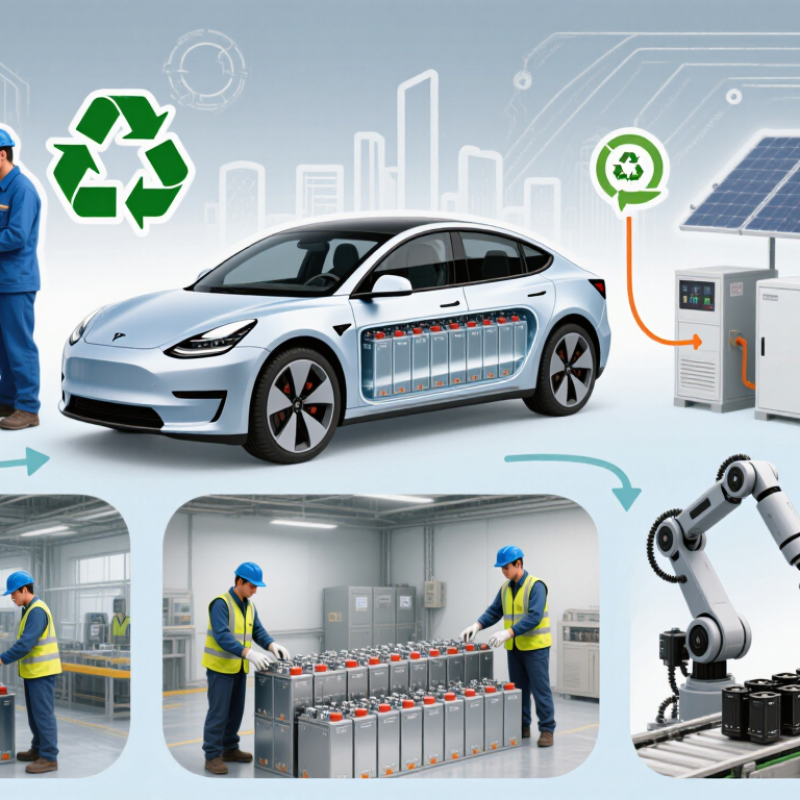
What Happens to Dead EV Batteries China Top 10 Recyclers?

How China Classifies and Collects Retired EV Batteries

China’s retired EV batteries are sorted by condition, not age alone. The national standard GB/T 34015.1-2017 sets out a method for testing residual capacity. Inspectors also consider safety, damage, and whether cells can perform consistently. Age alone is not enough. Batteries that pass assessment may be considered for cascade use; those that do not are directed toward material recovery.

Collection relies on a traceable chain. China’s 2018 Interim Measures for the Management of Recycling and Utilization of New Energy Vehicle Power Batteries place collection and recycling responsibilities on producers and related operators. In practice, retired packs may enter the system through vehicle service points, battery-replacement channels, or designated collection outlets. Records help track a pack from retirement to treatment. The handoff matters: a damaged pack can be difficult to identify from its outer casing alone.

The scale is growing. The IEA’s Global EV Outlook 2024 reported that China accounted for nearly 60% of global electric-car sales in 2023, creating a much larger future stream of retired batteries. Yet classification is not always tidy: mixed cell histories and uneven wear can complicate sorting. Capacity tests help, but they do not remove every uncertainty. A careful system needs both measurement and clear records.

How Batteries Are Tested for Reuse or Material Recovery

A retired EV battery does not go straight to a shredder. Technicians first review its service history, fault records, and charging behavior. Then they inspect the casing for swelling, corrosion, impact marks, or signs of moisture. One cracked corner can change the plan.

Testing usually happens in a controlled area with insulated tools and temperature monitoring. Staff measure voltage and insulation resistance, then run carefully limited charge-and-discharge cycles. These checks estimate usable capacity and reveal cells that heat up or lose charge unusually fast. A thermal camera may show a warm spot before it is visible by eye. Results matter, but they are not perfect: an old battery’s future performance can be hard to predict.

Packs with stable cells may be assessed for stationary storage or other second-life uses. That requires more than a promising capacity reading. Engineers also consider cell balance, remaining lifespan, and whether components can be safely matched. If reuse is unsuitable, trained facilities send the pack for material recovery. The battery is made safe, dismantled, and sorted so valuable metals can enter further processing. Slow work. A single test cannot tell the whole story, and careful records help keep uncertainty from becoming an assumption.

China’s Top 10 EV Battery Recycling Companies

China’s top ten EV battery recyclers are better judged by capability than by a fixed league table. The sector changes quickly. A credible operator can identify battery chemistry, test remaining capacity, and separate reusable packs from materials suited to recovery. At a sorting line, technicians scan labels, inspect swollen casings, and record voltage before dismantling a pack. That record matters. It supports traceability and helps prevent valuable cells from being treated as ordinary scrap. Leading firms generally combine collection networks, safe storage, diagnostic equipment, and mechanical or chemical processing. Strong partners also publish recovery data and explain how they manage process residues.

For buyers comparing China’s top ten, check more than announced capacity. Ask whether a facility can handle mixed chemistries, damaged packs, and fluctuating feedstock without relying on optimistic assumptions. Visit the site if possible. Look for separated storage bays, clear fire controls, calibrated instruments, and batch-level records. A polished brochure cannot prove consistent recovery. Public rankings may blur the difference between cell makers, material processors, and dedicated recyclers. That distinction is easy to miss. A useful shortlist should compare operating scale, collection reach, recovery yields, and transparent reporting. Figures vary by chemistry and measurement method. Some data remains hard to compare.

What Happens to Dead EV Batteries? China’s Top 10 EV Battery Recycling Companies

This table summarizes established recycling practices and regulatory features in China. Company names, brands, and unverified company rankings are intentionally omitted; it is not a company-by-company ranking.

No. Topic China Industry Fact
1 Collection network Retired power batteries are directed into recycling channels that can include vehicle service outlets, battery-related businesses, and designated collection points. The applicable recycling rules cover batteries through collection and subsequent treatment.
2 Producer responsibility China’s 2018 Interim Measures on recycling and utilization of new-energy-vehicle power batteries establish producer-responsibility requirements for vehicle manufacturers and other participants in the battery lifecycle.
3 Traceability China uses a power-battery traceability management system to record lifecycle information, supporting the tracking of batteries from production and use through retirement and recycling.
4 Initial inspection Incoming packs are assessed for condition and safety before a reuse or recycling route is selected. Checks can include battery identification, physical condition, electrical status, and remaining-capacity testing.
5 Second-life assessment Batteries that remain suitable for use may be evaluated for cascade utilization in less demanding applications. Suitability depends on condition, safety, and the requirements of the intended application.
6 Material recycling Batteries unsuitable for further use are dismantled and processed to recover usable materials. The exact process depends on battery chemistry, pack design, and the condition of the battery.
7 Materials recovered Depending on chemistry and process, recycling can recover materials such as lithium, nickel, cobalt, manganese, copper, aluminum, and graphite. Not every battery contains all of these materials.
8 Battery chemistry Lithium iron phosphate (LFP) and nickel-containing lithium-ion chemistries are both used in electric vehicles. Their different material compositions affect sorting, processing, and potential recovery value.
9 Safety controls Damaged or retired packs can retain electrical energy and may present fire or chemical hazards. Safe handling therefore requires controlled storage, appropriate electrical precautions, and qualified treatment procedures.
10 Standards and oversight China has issued policies and technical standards addressing battery traceability, testing, recycling, and comprehensive utilization. Actual treatment routes, recovery rates, and facility capabilities vary; there is no single yield that applies to every battery.

How Recyclers Recover Lithium, Nickel, Cobalt, and Other Materials

In China, recycling starts with chemistry checks, safe discharge, and pack dismantling. Cells are shredded into a powder called black mass, which contains valuable metals. Hydrometallurgical processing uses liquid solutions to separate lithium, nickel, and cobalt. Copper and aluminum can be recovered from other battery fractions. Pyrometallurgy can recover several metals, but lithium may need an additional recovery step.

The IEA’s Global Critical Minerals Outlook 2024 examines recycling’s role in mineral supply. Its scenarios indicate that recycling could reduce the need for new mines by roughly 10–30% by 2040, depending on the mineral. Actual recovery depends on battery chemistry, pack design, and process controls. Not perfectly circular. Some material is lost, and recycled feedstock varies in quality. That gap deserves more attention.

Tips: Keep battery packs intact and send them through qualified collection channels. Mixing chemistries or damaging cells can complicate sorting and increase safety risks. Ask recyclers for measured recovery rates by material, not just a general “recycled” claim. Small details matter.

Recovering Materials from Spent Batteries: EU Minimum Targets

Battery recyclers recover valuable metals from end-of-life batteries. The chart shows the EU’s legally set minimum recovery targets for lithium, cobalt, copper, and nickel—not measured results for Chinese recyclers or individual companies.

Targets are percentages of the relevant material recovered from waste batteries: lithium, 50% by 2027 and 80% by 2031; cobalt, copper, and nickel, 90% by 2027 and 95% by 2031. Source: EU Battery Regulation (EU) 2023/1542, Article 71.

Key Challenges Shaping China’s Battery Recycling Industry

China’s battery recycling challenge begins long before a pack reaches a processing line. Retired batteries are spread across repair shops, dismantling yards, storage sites, and collection networks. Some arrive with clear service records; others have incomplete histories. That gap makes safe sorting slower. Workers need to identify a pack’s chemistry, damage, and remaining capacity before selecting a suitable route. Similar-looking modules may behave differently after years of heat, fast charging, and uneven use. A quick visual check is not enough.

Processing capacity is only part of the problem. Battery designs and material mixes vary, so recycling methods cannot always be applied uniformly. Lithium iron phosphate packs, for example, may offer weaker recovery economics than some nickel-rich chemistries. Prices for recovered materials also shift, making investment and day-to-day operations harder to plan. Damaged packs need careful handling and transport, while records must follow them between collection and processing. That takes coordination across many businesses. It is easy to discuss traceability; maintaining consistent records across a fragmented network is less tidy. China’s large electric vehicle market can support recycling at scale, but reliable collection, safer logistics, and better battery information still shape what that scale can deliver.

FAQS

How are retired EV batteries classified in China?

Inspectors assess residual capacity, safety, damage, and cell consistency. Age alone is not enough.

Where can retired batteries enter the collection system?

They may be returned through service points, replacement channels, or designated collection outlets. Records track each pack.

What do technicians check before testing a battery?

They review service history and charging behavior, then inspect for swelling, corrosion, impact marks, or moisture. One cracked corner matters.

How do technicians test a battery’s condition?

They measure voltage and insulation resistance, then run limited charge-and-discharge cycles. Temperature monitoring helps reveal unusual heat.

Can every battery with good capacity be reused?

No. Engineers also consider cell balance, remaining lifespan, and safe component matching. Capacity alone is not enough.

What happens when a battery is unsuitable for reuse?

Trained facilities make it safe, dismantle it, and sort materials for further processing. It is careful, slow work.

Which materials can battery recycling recover?

Processing can recover lithium, nickel, cobalt, copper, and aluminum. Actual recovery depends on chemistry, design, and process controls.

Does recycling eliminate the need for newly mined minerals?

Not entirely. Scenarios suggest recycling could reduce mining needs by roughly 10–30% by 2040, depending on the mineral.

How can people help batteries reach suitable recyclers?

Keep packs intact and use qualified collection channels. Ask for measured recovery rates by material, not just a general recycling claim. Small details matter.

Conclusion

What happens to electric car batteries when they die? In China, retired EV batteries are collected through designated channels and assessed according to their condition, remaining capacity, and safety. Batteries that still meet performance needs may be tested, sorted, and prepared for a second use in less demanding energy-storage applications. Those that are too degraded or unsuitable for reuse are directed to material recovery.

This article explains how testing determines a battery’s next step and introduces ten leading types of recycling companies in China without focusing on brand names. It also outlines how recyclers separate and recover valuable materials such as lithium, nickel, and cobalt, along with other reusable components. The industry’s growth is shaped by challenges including inconsistent battery designs, collection and transport costs, complex processing requirements, and the need to improve recovery efficiency while maintaining safe operations.

Amelia

Amelia

Amelia is a seasoned marketing professional with a wealth of expertise in our company’s core offerings. With an unwavering passion for driving growth and innovation, she plays a pivotal role in shaping our marketing strategies and enhancing brand visibility. A key aspect of her responsibilities......