As electric vehicles (EVs) become more popular, many owners ponder a critical question: "Can I charge my electric car with a regular outlet?" According to John Smith, an industry expert and author on electric car technology, "Using a regular outlet for charging can be convenient but may not always be efficient." This highlights the ongoing debate surrounding home charging options for electric vehicles.
Charging your EV at home using a standard outlet appears simple. It requires no special equipment, making it accessible for most users. However, the charging speed with a regular outlet is significantly slower. Many drivers find the lack of fast charging options problematic. For those relying solely on a standard electrical outlet, the wait time can be extensive, sometimes taking up to 12 hours for a full charge on certain models.
Many owners face the reality that while a regular outlet is a viable option, it might not meet all their needs. The infrastructure for faster charging is growing, but not uniformly across regions. Car owners should consider their daily usage and long-term charging habits. Ultimately, the question remains: Is a regular outlet sufficient for long-term electric car ownership? This is a nuanced issue that requires careful thought and reflection.
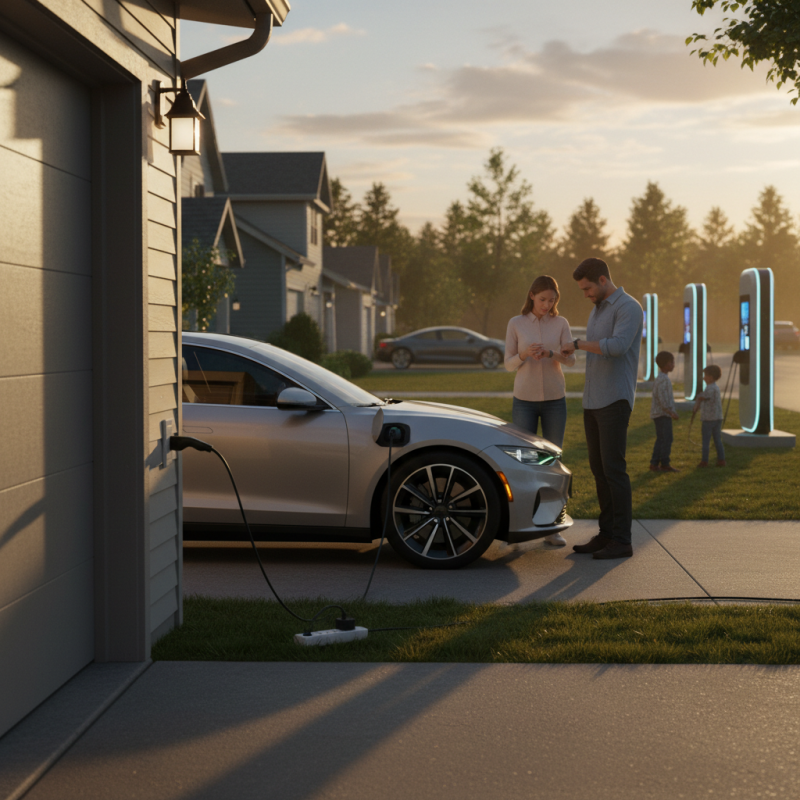
Understanding Electric Car Charging Methods
When it comes to charging an electric car, methods can vary widely. Many people wonder if a regular outlet can adequately charge their vehicle. Standard home outlets are typically rated at 120 volts. This means charging will be much slower compared to dedicated electric vehicle chargers. Charging times can take hours, even overnight, when using an ordinary outlet.
However, it is essential to consider factors like battery capacity and driving habits. For someone with a shorter daily commute, using a regular outlet may suffice. It can be a convenient option in some cases. Yet, for those with longer distances, relying solely on a regular outlet could be impractical. Users may find themselves running low on battery power more often than desired.
Electric car owners should also reflect on the implications of this charging method. While it may be an accessible option, there are potential risks. Overheating a standard outlet could lead to safety hazards. Investing in a home charging station or utilizing public charging infrastructure might offer a better solution. Planning ahead can help mitigate downtime and ensure reliable access to charging.
Comparison of Regular Outlets and Level 1 Chargers
When considering charging an electric car at home, the type of outlet you use plays a significant role. Regular outlets,
typically rated at 120 volts, can provide a slow and steady charge. For example,
a standard outlet might add about 4 to 5 miles of range per hour. This is ideal for overnight charging
but may not suffice for daily use, especially for commuters.
Level 1 chargers, on the other hand, connect directly to your home's electrical
system. They often utilize a 240-volt supply, significantly reducing charging time.
A Level 1 charger can offer 25 to 30 miles of range per hour, making it much
more efficient for daily driving needs. However, installation can be costly and time-consuming. Not everyone has the
infrastructure to support Level 1 charging at home.
Homeowners must reflect on their driving habits and charging needs. Some may find a regular outlet sufficient for their
lifestyle. Others, who frequently drive long distances, could find it inadequate. The choice between using a regular
outlet or investing in a Level 1 charger is personal and depends on individual
circumstances.
Charging Speed and Efficiency: What to Expect in 2026
In 2026, charging an electric car using a regular outlet might still be viable for some users. However, the charging speed and efficiency will likely raise questions. Standard outlets typically offer around 120 volts, providing a slow charging experience. You can expect about four to five miles of range per hour. This is manageable for overnight charging but not practical for quick trips.
Energy efficiency is set to improve as technology advances. Charging systems will likely become more intelligent and adaptable. However, using a regular outlet might lead to longer charging times, leaving some users frustrated. This slower method may still suit commuters with predictable routines, but it is not enough for those with urgent travel needs.
Reflecting on future developments, many people will need to consider alternative charging solutions. Public charging stations could proliferate, offering faster charging options. However, relying solely on home outlets might pose challenges. Users should be aware of these limitations when planning their daily driving habits.
Safety Considerations for Charging Electric Cars at Home
Charging an electric car using a regular outlet may seem convenient, but it comes with significant safety considerations. Data from the U.S. Department of Energy highlights that standard household outlets typically provide only 15 to 20 amps of current. This rate is insufficient for rapid charging and could lead to overheating and electrical hazards if not managed properly.
Using a regular outlet for charging also poses the risk of overloading the circuit. According to a report from the Electric Vehicle Association, an average home circuit can handle 1,440 watts safely. If multiple appliances run simultaneously, the risk of tripping breakers or causing electrical fires increases. Experts recommend using dedicated circuits designed for EV charging, as they can safely handle higher loads.
There’s a need for public awareness around potential risks. Not all outlets are created equal, and older homes may have wiring issues that can exacerbate these dangers. Regular inspections of home electrical systems are crucial. Proper grounding and circuit protection must be ensured to prevent accidents. As the adoption of electric vehicles increases, it’s vital for homeowners to prioritize safety when charging at home.
Future Developments in Electric Vehicle Charging Technology
As we look towards 2026, advancements in electric vehicle (EV) charging technology are expected to transform the landscape. While many drivers currently use regular outlets for home charging, innovations on the horizon will likely enhance this process. Fast-charging stations will become more widespread. Wireless charging options may gain traction, allowing for effortless charging without tangled cables.
Emerging technologies, such as smart chargers, will optimize charging times. These chargers can communicate with the electric grid to determine the best times for charging when energy demand is low. This can lead to reduced charging costs. However, relying on conventional outlets may still be appealing for many users. The convenience and accessibility of home charging cannot be underestimated.
Yet, concerns remain about the efficiency and speed of charging through standard outlets. They could lead to prolonged charging times, making them less practical for long journeys. The effectiveness of these traditional methods will require careful assessment. As electric cars become more integrated into daily life, these developments will shape user experiences and expectations.
Can I Charge My Electric Car Using a Regular Outlet in 2026? - Future Developments in Electric Vehicle Charging Technology
| Charging Method |
Charging Speed (miles/hour) |
Typical Voltage (V) |
Estimated Cost per Charge ($) |
Convenience Level (1-5) |
| Regular Household Outlet (120V) |
4-5 |
120 |
2.50 |
3 |
| Level 2 Charging Station (240V) |
20-30 |
240 |
5.00 |
4 |
| DC Fast Charging |
60-80 |
480 |
15.00 |
5 |
| Solar Charging Systems |
10-15 |
Varies |
1.00 |
4 |
FAQS
: Yes, you can use a standard outlet, but charging will be slow.
Charging can take hours or even overnight, depending on the battery capacity.
It can be safe, but overheating may pose risks. Careful monitoring is necessary.
Expect about four to five miles of range per hour with a standard outlet.
Those with short daily commutes may find it convenient, but it might not suit everyone.
Relying solely on a regular outlet could be impractical; consider public charging stations.
Charging systems will likely become smarter and more efficient in the coming years.
Some may still use them, but it could lead to longer charging times and frustration.
Consider your driving habits; a home charging station might be a better long-term solution.
Yes, potential overheating and inefficient charging could cause safety concerns.
Conclusion
As electric vehicle (EV) adoption increases, many users are left wondering, "Can I charge my electric car with a regular outlet?" This article explores various charging methods available for EVs, emphasizing the differences between regular outlets and Level 1 chargers. While a regular outlet can be used, its efficiency and charging speed may be considerably slower compared to dedicated charging solutions.
In 2026, users can expect advancements in charging technology that could improve speed and accessibility. Nevertheless, safety remains a critical consideration when charging at home. With the ongoing development in EV charging infrastructure, understanding how to effectively utilize both conventional outlets and Level 1 chargers will be essential for EV owners in maximizing their vehicle's potential.

 Emy Car