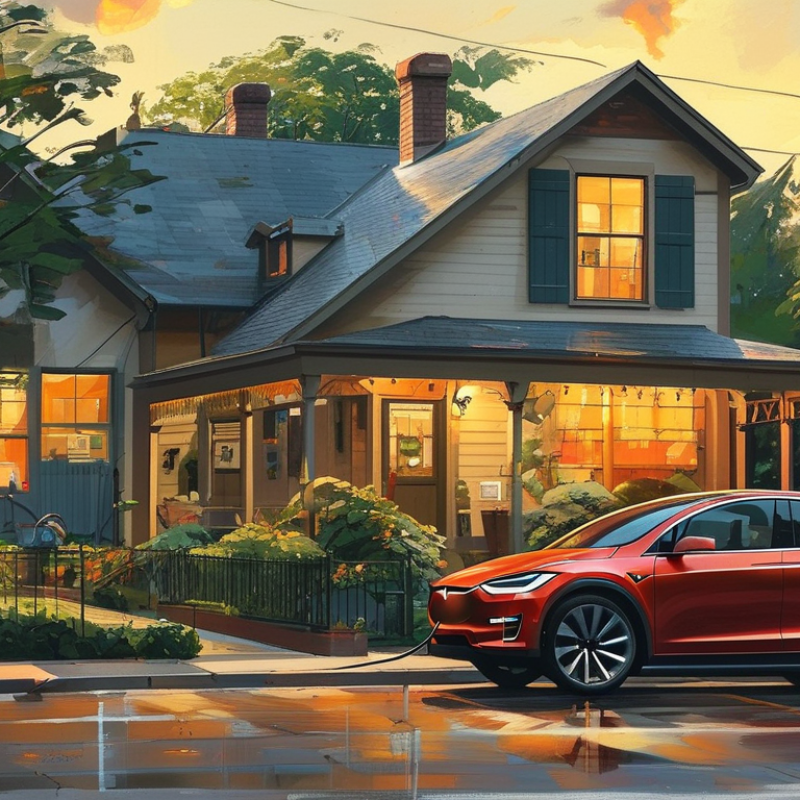
Charging your electric vehicle (EV) at home can be more efficient and cost-effective with careful planning. One crucial question arises: What is the best time of day to charge an EV at home? The answer varies based on several factors, including energy rates and personal schedules.
Charging during off-peak hours often leads to savings on your electricity bill. Utilities usually offer lower rates at night when demand diminishes. Therefore, charging your EV after sunset may help reduce costs. Furthermore, this strategy supports a more stable energy grid. However, not everyone may prefer or be able to charge overnight.
Consider your specific needs and lifestyle. Factors like when you commute or how quickly you need a full charge play significant roles. While convenience is essential, being mindful of energy consumption patterns can enhance both savings and sustainability. Balancing these elements requires reflection and may not yield an immediate perfect solution.
Charging your electric vehicle (EV) at home can be influenced by several factors. One key factor is your local electricity rates. Many utilities offer lower prices during off-peak hours. According to the U.S. Energy Information Administration, rates can vary by as much as 50% between peak and off-peak times. Charging during these cheaper hours can lead to significant savings.
Another important factor is the battery management system of your EV. Modern EVs optimize charging to protect battery life. Research suggests that charging to around 80% rather than 100% can extend battery health. This means you may not need to charge every time you plug in. It is essential to understand your vehicle's charging curve for efficiency.
**Tips for Smart EV Charging:**
- Schedule your charging during off-peak hours to save money.
- Monitor your home’s energy usage to identify your optimal charging times.
- Use a home energy management system to automate charging based on electricity rates.
Every household is different. Your local grid conditions, your EV model, and your charging preferences will create a unique charging strategy. Finding the right balance may require some trial and error. Don't hesitate to change your habits based on your experience.
This chart illustrates the average cost of electricity (in cents per kWh) during different times of the day for charging an electric vehicle at home. It highlights how electricity rates can vary throughout the day and helps EV owners choose the optimal time for charging.
Charging an electric vehicle (EV) at home can be a great way to save on energy costs. Understanding electricity rates is essential. Most utility companies have peak and off-peak times. During peak hours, rates are higher due to increased demand. Off-peak times usually occur late at night or early in the morning. Charging your EV during these off-peak hours can lead to significant savings.
Choosing the right time to charge your EV can be challenging. Factors like your EV's battery capacity and daily driving habits come into play. Some might charge overnight while they sleep, which is often beneficial. Others may prefer to charge in the morning, though this could coincide with peak hours. Analyzing your energy provider’s rate structure will help you maximize savings. It's worth exploring time-of-use plans, which incentivize off-peak charging.
Many drivers aren't aware of the importance of timing their charging. Poor management can lead to higher bills without additional benefits. Keeping an eye on your charging habits may encourage more cost-efficient practices. Consider using smart chargers that can schedule charging times automatically. This reflects a commitment to both financial savings and environmental responsibility. Charging your EV in the right time frame can lead to both better energy usage and reduced costs.
| Time Period | Electricity Rate (USD per kWh) | Optimal Charging Recommendation |
|---|---|---|
| 6 AM - 10 AM | $0.15 | Not Recommended (Peak Hours) |
| 10 AM - 4 PM | $0.12 | Moderate Recommendation |
| 4 PM - 9 PM | $0.18 | Not Recommended (Peak Hours) |
| 9 PM - 12 AM | $0.10 | Recommended (Off-Peak Hours) |
| 12 AM - 6 AM | $0.08 | Highly Recommended (Off-Peak Hours) |
Charging your electric vehicle (EV) at home can be efficient if done right. One effective practice is to charge during off-peak hours. These are times when electricity demand is low, typically at night. Charging your EV during these hours can help you save on electricity costs. Many utility companies offer lower rates during these times, making it economical.
Additionally, consider the use of a smart charger. These devices allow for scheduling, which means you can program them to start charging at optimal times. This adds convenience. However, remember that not all smart chargers are the same. Research and choose one that fits your needs. It’s also wise to monitor your charging habits. Keep an eye on how much time and energy your EV consumes. This information can lead to better decisions in the future.
Lastly, ensure that your charging station is well maintained. Regularly check connections and cables for wear. Faulty equipment can lead to slower charging and increased energy waste. Finding the balance between efficiency and convenience is key. Reflect on your habits and make adjustments as needed. Everyone’s charging needs are different, and sometimes small changes can yield significant benefits.
Charging your electric vehicle (EV) at home isn't just about convenience; timing can significantly impact the environment. Recent studies indicate that charging during off-peak hours, typically late at night or early morning, can reduce strain on the grid. For instance, data from the International Energy Agency shows that charging at these times can lower greenhouse gas emissions by 30%.
Environmental benefits are tied to the energy mix used for charging. During off-peak hours, utilities often rely more on renewable sources. This shift is crucial. According to the U.S. Department of Energy, using renewable energy for charging reduces the carbon footprint of EVs. Yet, not all regions have equal access to green energy. A lack of local renewable sources could make it less effective.
Moreover, an unsettling issue arises with demand-response strategies. High demand can lead to fossil fuel reliance. As peak demand grows, coal and natural gas may fill the gap. This can negate the environmental advantages of EVs. Thus, understanding local energy trends is essential for making responsible charging choices. It’s clear that timing your EV charge is a vital element for both cost-saving and ecological responsibility.
Smart charging solutions are essential for home EV owners. They help optimize charging schedules for cost savings and convenience. To make the most of your electric vehicle (EV), understanding your charging options is vital. Many homeowners consider time-of-use rates, which can significantly lower your energy costs.
Installing a smart charger can provide you with real-time data. This allows you to track usage and costs, and it can be programmed according to your electricity rate plan. Some chargers can even adjust the charging speed based on grid demand. However, this kind of technology comes with a learning curve. You might struggle at first to find the best settings for your needs.
Another aspect worth considering is energy efficiency. Not all charging solutions are equally effective. You may find that some models take longer to charge your EV. Research and compare different devices to find what works best for you. While smart charging offers convenience, it may require adjustments in your daily routine. Be prepared to reflect on your habits to optimize this process.
: Peak rates are higher during busy hours. Off-peak rates are lower at night or early morning.
Charging during off-peak hours can lower your electricity costs significantly.
Charge during off-peak hours. Use smart chargers for scheduling and monitoring your charging habits.
A smart charger allows you to schedule charging times for your EV. It can provide real-time data on energy use.
No, different smart chargers have various features. Research is crucial to find one that meets your needs.
Regularly check connections and cables for wear. Faulty equipment can waste energy and slow down charging.
Poor charging habits during peak hours can lead to higher bills. Monitor your usage for better decision-making.
Compare different models for efficiency. Consider how each fits into your daily routine and needs.
Smart chargers can have a learning curve. Finding the best settings may require some trial and error.
Small adjustments in your charging habits can lead to significant savings and better energy management.
What is the best time of day to charge an EV at home? This question hinges on various factors, including electricity rates and individual schedules. Generally, charging during off-peak hours can result in lower electricity costs, as energy providers often offer reduced rates at night. Homeowners should be aware of peak vs. off-peak times in their local area to maximize savings.
Additionally, adopting best practices for charging efficiency can enhance the overall experience. Utilizing smart charging solutions can optimize charging patterns based on rates and personal usage. Environmental considerations also play a significant role; charging during times when renewable energy is more abundant can reduce the carbon footprint associated with EV ownership. By considering these factors, EV owners can make informed decisions about when to charge their vehicles at home, balancing cost, efficiency, and environmental impact.
Emy Car