Driving an electric vehicle into floodwater is not a test of courage. It is a decision involving traction, visibility, battery protection, and personal safety. This guide examines How to safely drive an electric car through deep water? The honest answer is simple: avoid deep water whenever a safer route exists.
John Nielsen, former AAA Managing Director of Automotive Engineering and Repair, has often emphasized this practical warning: “If you can’t see the road, don’t drive through it.” That advice matters even more during flooding. Water may hide potholes, broken pavement, open drains, or a strong current. A quiet-looking street can still move your vehicle sideways within seconds.
Modern EVs include sealed battery packs and protective systems. They are not designed to make floodwater harmless. Check the owner’s manual before entering any standing water. Follow the manufacturer’s maximum water-depth guidance, if provided. Never assume another EV model has the same protection. Slow down, keep both hands on the wheel, and avoid creating a bow wave. Water reaching the door sills deserves immediate caution.
Still, this guide cannot remove uncertainty. Flood conditions change quickly. If water rises around the vehicle, leave only when doing so is safer, and move toward higher ground. Do not restart an EV that has stalled in deep water. Contact the manufacturer, roadside assistance, or a qualified EV technician for inspection. One uncomfortable truth remains: arriving late is better than gambling with hidden water.
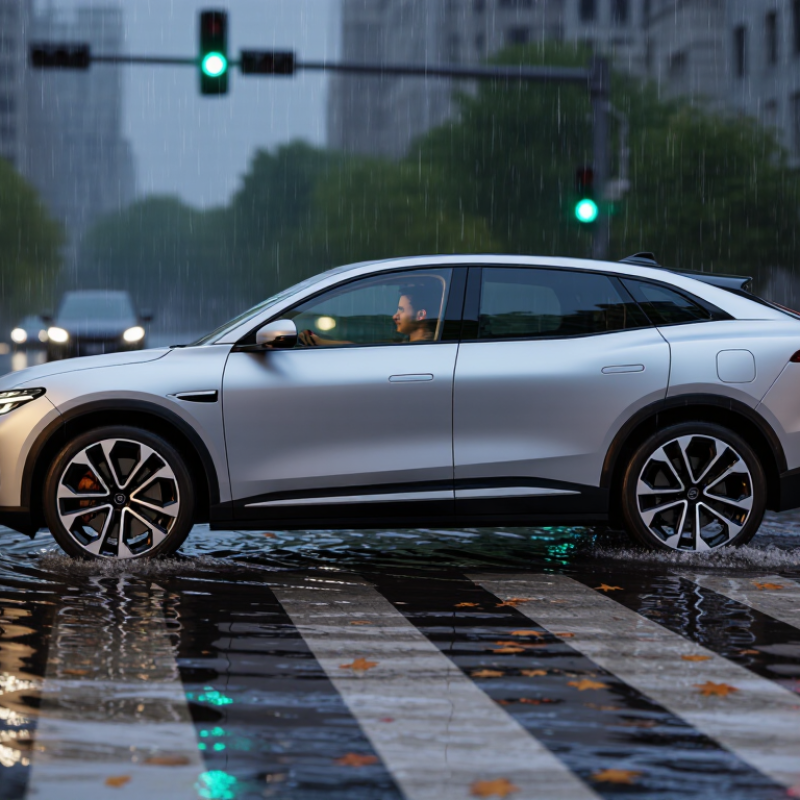
Electric vehicles are water-resistant, not underwater vehicles. The U.S. National Highway Traffic Safety Administration warns that 12 inches of moving water can float a small car. Eighteen inches can move larger vehicles. Two feet may sweep away most vehicles, regardless of drivetrain. Those figures describe flood danger, not safe crossing depth.
High-voltage batteries use sealed enclosures and undergo electrical safety testing under UNECE Regulation No. 100. However, that protection does not make a flooded road predictable. Water can hide potholes, broken pavement, or a washed-out bridge. It can also reduce tire grip and damage sensors, brakes, and charging components. A vehicle may keep moving while serious damage develops underneath.
Do not enter moving water.
If water rises, stop on higher ground and follow emergency guidance. If flooding has already surrounded the vehicle, avoid touching exposed cables or entering the cabin through deep water. The Federal Emergency Management Agency advises drivers to turn around rather than risk a flooded roadway. That advice feels cautious, perhaps overly cautious, until the road disappears beneath brown water.
After immersion, do not recharge or restart the vehicle without qualified inspection. Dry floors do not prove battery safety. The difficult part is accepting that a capable EV can still have a narrow water limit. Check the owner’s manual, because clearance, sealing, and recovery instructions differ between vehicles.
Before approaching a flooded road, stop on higher ground and study the water carefully. Moving water can hide broken pavement, open drains, or fallen branches. It may also shift a vehicle unexpectedly. Do not rely on another car’s successful crossing. Its ground clearance, damage, and condition may be different.
Check official road closures and local emergency updates before moving closer. Look for barriers, warning signs, floating debris, and visible road edges. If the water reaches the lower door sill or wheel hub, turning around is the safer choice. Never enter water that is flowing across the road. Even shallow-looking water can conceal strong currents.
Keep distance from the flood.
If the route appears passable, confirm that the road surface remains visible and stable. Drive slowly and steadily, without stopping in the water or creating a large bow wave. After leaving the flooded section, apply the brakes gently in a safe area. Watch for warning lights, unusual sounds, reduced power, or steering changes. An electric vehicle may resist water better than many people expect, but resistance is not immunity.
A careful driver should accept uncertainty. If depth, current, or road damage cannot be judged clearly, do not proceed. Contact roadside assistance or emergency services, especially when the vehicle is stranded or partially submerged. Do not touch damaged high-voltage components or attempt a personal inspection. Consult the vehicle manual afterward, because water exposure can create hidden problems hours later.
Before driving an EV through deep water, check the weather, road warnings, and the vehicle’s owner manual. Do not enter water with unknown depth, strong current, or a covered road. Even a short stretch can hide potholes, loose gravel, or damaged pavement. Measure the water against the vehicle’s approved wading limit, not guesswork. If the water reaches the wheel hubs, reconsider. Turning around is often the safest preparation.
Secure loose items and close every window and door. Keep the battery charged enough to reach a safe exit. Remove unnecessary distractions, then drive slowly with steady acceleration. Avoid sudden braking, sharp steering, and creating waves near other vehicles. Leave a large gap ahead. Water can rise within seconds. Keep both hands on the wheel.
After leaving the flooded section, apply the brakes gently several times in a safe area. Listen for unusual sounds and check warning messages. Do not continue if steering, braking, or electrical functions seem abnormal. If the EV stalls, do not restart it or touch submerged cables. Exit only when the route is clearly safer than remaining inside, and contact emergency services. No checklist is perfect. Water depth changes, and even careful drivers can misjudge it. That doubt matters.
| Step | Safety Check or Action | Practical Data or Threshold | Why It Matters | Recommended Decision |
|---|---|---|---|---|
| 1. Check the route | Look for road closures, flood warnings, submerged obstacles, damaged pavement, and bridge restrictions before entering the water. | A flooded road can hide potholes, open drains, debris, and washed-out surfaces even when the water looks shallow. | The visible water level does not show the condition of the road beneath it. | Turn around if the route is closed, unknown, or cannot be inspected safely. |
| 2. Measure water depth | Use a visible depth marker or a known reference point. Do not enter water to measure it. | There is no universal safe wading depth for all EVs. The vehicle handbook’s specified maximum depth, if provided, is the controlling limit. | Ground clearance, battery enclosure design, intake locations, seals, speed, and water movement differ between vehicles. | Do not proceed when the depth is unknown or above the vehicle’s documented limit. |
| 3. Assess moving water | Avoid flowing floodwater, especially where the road surface or water edges cannot be seen. | Approximately 15 cm of fast-moving water can knock a person down; about 30 cm can float many small cars; about 60 cm can sweep away larger vehicles. | Water force can remove tire grip and move a vehicle sideways or downstream. | Never drive through flowing water, regardless of the vehicle’s electric powertrain. |
| 4. Review the EV manual | Confirm the approved water-wading limit, warnings for charging after water exposure, and any required inspection procedure. | The limit may be expressed as a maximum depth, speed, duration, or a prohibition on floodwater. | High-voltage components are designed with protective insulation and sealing, but protection is not unlimited or identical across vehicles. | Follow the vehicle-specific instructions; do not substitute general EV advice for the manual. |
| 5. Prepare the vehicle | Secure loose items, close all windows, check tire condition, and disable automatic functions only when the vehicle instructions recommend it. | Use the recommended cold-tire pressure shown on the vehicle information label; do not reduce tire pressure for a water crossing. | Correct tire pressure and a secured cabin help preserve control and reduce avoidable damage. | If the tires, brakes, steering, or warning systems are already compromised, do not enter the water. |
| 6. Enter slowly and straight | Select the appropriate drive mode, keep both hands on the wheel, and enter at a steady, low speed without creating a bow wave. | Avoid sudden acceleration, hard braking, sharp steering, and unnecessary wheel spin. | A bow wave or high speed can push water into areas that would otherwise remain above the waterline. | If the vehicle loses traction, stop accelerating and exit the water only when the route is safe. |
| 7. Maintain a controlled crossing | Keep a safe gap from other vehicles and avoid stopping in the deepest section. | The crossing should be brief and completed at a consistent speed within the vehicle’s specified limit. | Another vehicle can create waves that raise the water level around your EV and reduce visibility. | Abort the crossing if the water level rises, the current strengthens, or the road edge disappears. |
| 8. Test the brakes afterward | Once clear of the water, apply the brakes gently at low speed in a safe area. | Repeat gently until braking response returns to normal, without creating a hazard for other road users. | Wet brake components may temporarily reduce braking performance. | Stop and request assistance if braking remains abnormal or warning messages appear. |
| 9. Inspect after exposure | Check for debris, underbody damage, fluid contamination, unusual noises, electrical warnings, or changes in vehicle behavior. | Floodwater exposure can cause delayed corrosion or damage even when the vehicle initially drives normally. | Water may contain salt, chemicals, sewage, or abrasive debris that can affect connectors and mechanical parts. | Arrange a qualified inspection after significant immersion, especially if water reached the cabin or underbody. |
| 10. Handle charging safely | Do not connect the EV to a charger if the charge port, cable, plug, or vehicle has been submerged or visibly damaged. | Drying the exterior is not proof that the electrical connection is safe. | Moisture or contamination at high-voltage charging interfaces can create shock, short-circuit, or fire hazards. | Isolate the vehicle if required by the manual and contact qualified roadside or service professionals. |
Safe EV Techniques for Crossing Standing Water
Standing water is not automatically safe for an electric vehicle. Treat it as a road hazard, not a battery-sealing test. NOAA’s National Weather Service warns that about 12 inches of moving water can float a small car. Around 18 inches can move larger vehicles. Even shallow-looking water may conceal potholes, broken pavement, or debris. Before entering, check official flood alerts and estimate depth from a safe location. If the water is moving, rising, or unfamiliar, turn around. That is not failure.
For shallow standing water, follow the vehicle manual’s stated limits. Drive slowly and steadily, avoiding sudden acceleration, braking, or lane changes. Keep both hands on the wheel. Leave extra distance from other vehicles, because their tires can create waves. Never touch submerged charging equipment or damaged electrical cables. After crossing, test the brakes gently in a clear area and watch for warning messages. Do not assume a sealed battery makes every flood crossing harmless. The IEA Global EV Outlook 2025 reports more than 17 million electric cars sold globally in 2024. More drivers will face wet-road decisions. Yet no universal water depth exists for every EV; clearance, design, tires, and road conditions differ. A cautious driver can still misjudge depth. I would rather reverse early than discover the road beneath the water. Sources: IEA Global EV Outlook 2025; NOAA National Weather Service flood safety guidance.
After an EV Enters Deep Water
If an EV enters deep water, leave the vehicle only when escape is safe. Turn off the ignition if possible, release your seat belt, and move away from moving water. Do not touch exposed cables or metal parts connected to the vehicle. Floodwater may hide debris, open drains, or unstable ground. Call emergency services and describe the vehicle’s location clearly. If the doors will not open, use a side window, but avoid breaking glass unless necessary.
Keep people away from the EV. Do not restart it, charge it, or connect another battery. Water can damage high-voltage components, even when the vehicle looks normal. The danger may remain after the water recedes. A quiet car is not always a safe car. Contact a qualified EV technician or the vehicle manufacturer’s emergency support channel for instructions. Ask for transport equipment suitable for a damaged electric vehicle, rather than arranging an improvised tow.
Photographs can help with insurance and inspection, but take them from dry, stable ground. Never climb beneath the vehicle or remove panels yourself. I once thought a drained battery meant the electrical risk had disappeared; that assumption was too simple. Moisture, corrosion, and trapped energy can create problems later. Have the EV professionally isolated and inspected before anyone drives it again. Even a short trip to a repair facility can be unsafe.
General flood-safety guidance indicates that approximately 15 cm of moving or standing water can reach the underside of many passenger vehicles, around 30 cm can cause loss of control or stalling, and around 45 cm can move many vehicles. These are general floodwater reference points, not EV wading limits.
If an EV enters deep water, stop as soon as it is safe, switch off the vehicle, leave through a safe exit if necessary, keep away from damaged high-voltage components, and contact emergency or qualified EV recovery services. Do not restart or charge a water-exposed EV until it has been professionally inspected.
No. Electric vehicles resist water, but they are not underwater vehicles. Do not enter moving water.
No universal depth exists. Clearance, sealing, battery design, and road conditions differ. The owner’s manual matters.
Twelve inches of moving water can float a small car. Eighteen inches can move larger vehicles. Two feet may sweep away most vehicles. These figures describe danger, not safe crossing limits.
Stop on higher ground and check closures, barriers, debris, and visible road edges. Look carefully. Water may hide potholes, open drains, branches, or collapsed pavement.
Turn around if the water reaches the lower door sill or wheel hub. Never cross flowing water. If depth or road damage seems uncertain, do not proceed.
No. That vehicle may have different clearance, tires, damage, or weight. Its success proves very little.
Leave only when escape is safe. Release your seat belt, move away from moving water, and call emergency services. Do not touch exposed cables or connected metal parts.
No. Do not restart, charge, jump-start, or personally inspect the vehicle. Dry floors do not prove battery safety. Have qualified technicians isolate and inspect it first.
Keep people away and request equipment suitable for a damaged electric vehicle. Avoid improvised towing. Do not climb underneath or remove panels yourself.
Watch for warning lights, unusual sounds, reduced power, steering changes, or weak brakes. Apply the brakes gently in a safe area. Hidden damage may appear hours later.
This guide explains How to safely drive an electric car through deep water? It covers the unique risks EV drivers may face, including reduced traction, hidden road damage, water entering sensitive components, and the possibility of becoming stranded. Before attempting any crossing, drivers should assess the water’s depth, speed, visibility, current, and surrounding hazards. If the road is flooded beyond the vehicle’s recommended limit or the surface cannot be clearly seen, turning around is the safest choice.
The article also presents practical preparation and driving techniques, such as securing loose items, disabling unnecessary systems, maintaining a slow and steady speed, avoiding sudden braking, and leaving extra distance from other vehicles. After an EV enters standing water, drivers should move to a safe location, avoid touching damaged electrical parts, check for warning signs, and arrange a professional inspection before continuing to drive. Safety should always take priority over reaching the destination.

Emy Car